Writing for the Stage: The Dramatic Text Step by Step
Writing for the theater follows different rules than prose. A dramatic text is above all meant to be performed by actors in front of an audience, so every line has to come alive on stage. How do you get started without stalling after the first page? This guide covers the basics of dramatic construction, the principles of dialogue and ways to put your text to the test.
What Is a Dramatic Text?
A dramatic text is made of dialogue, the characters' lines, and stage directions, the notes about the action on stage. Most of the weight falls on dialogue: the spectator has no narrator and no access to the characters' thoughts. Everything that matters must be heard in the words and seen on the stage. Writing for the stage therefore means writing first of all for the people who will speak those words.
Stage directions specify what the dialogue does not say: the place, the moment, a gesture, a character's entrance or exit. It is better to keep them to the essentials. The director and the actors will make them their own, so there is no point in settling every detail of the staging there. Directions should serve the performance without replacing the dialogue. If they are too abundant or too fussy, they limit the performers' freedom and weigh down the reading.
How Do You Write Dialogue That Works on Stage?
Good dialogue moves the action forward instead of just passing along information. If two characters talk only to inform the audience about past events, the scene quickly turns flat.
An exchange gets more interesting when each character wants something and uses the conversation to get it. Another principle matters too: characters do not always say what they think. One talks about the weather while trying to find out whether the other is ready to face a difficult subject. This subtext gives actors something to play and lets the spectator draw their own conclusions. With every line, ask what the character is hiding or trying to avoid. You will soon see whether the words add something to the scene or merely fill a silence. In good dialogue, every turn of speech changes the situation, even slightly.
Shortening a line is sometimes enough to improve it. On stage, characters rarely speak in complete, perfectly built sentences. They interrupt each other, return to an idea, answer sideways. Dialogue that looks disjointed on the page can sound right because it resembles a real conversation. We suggest writing the exchange as simply as possible first and refining its form afterward.
Writing for the Stage, One Step at a Time
To begin, it is better to write short scenes and then build the whole from them. This format lets you test characters and style without risking the loss of many pages. Each scene can follow a simple structure: a situation, a tension, a turning point and a resolution.
In a short scene, the situation sets the frame and establishes the relationship between the characters. Tension arises when their goals collide. The turning point shifts the balance of power or reveals something new. Finally, the resolution closes the scene without necessarily ending the conflict. Once you have mastered this pattern in a short format, you can carry it over to a longer dramatic text more easily by treating each new scene as a new exercise.
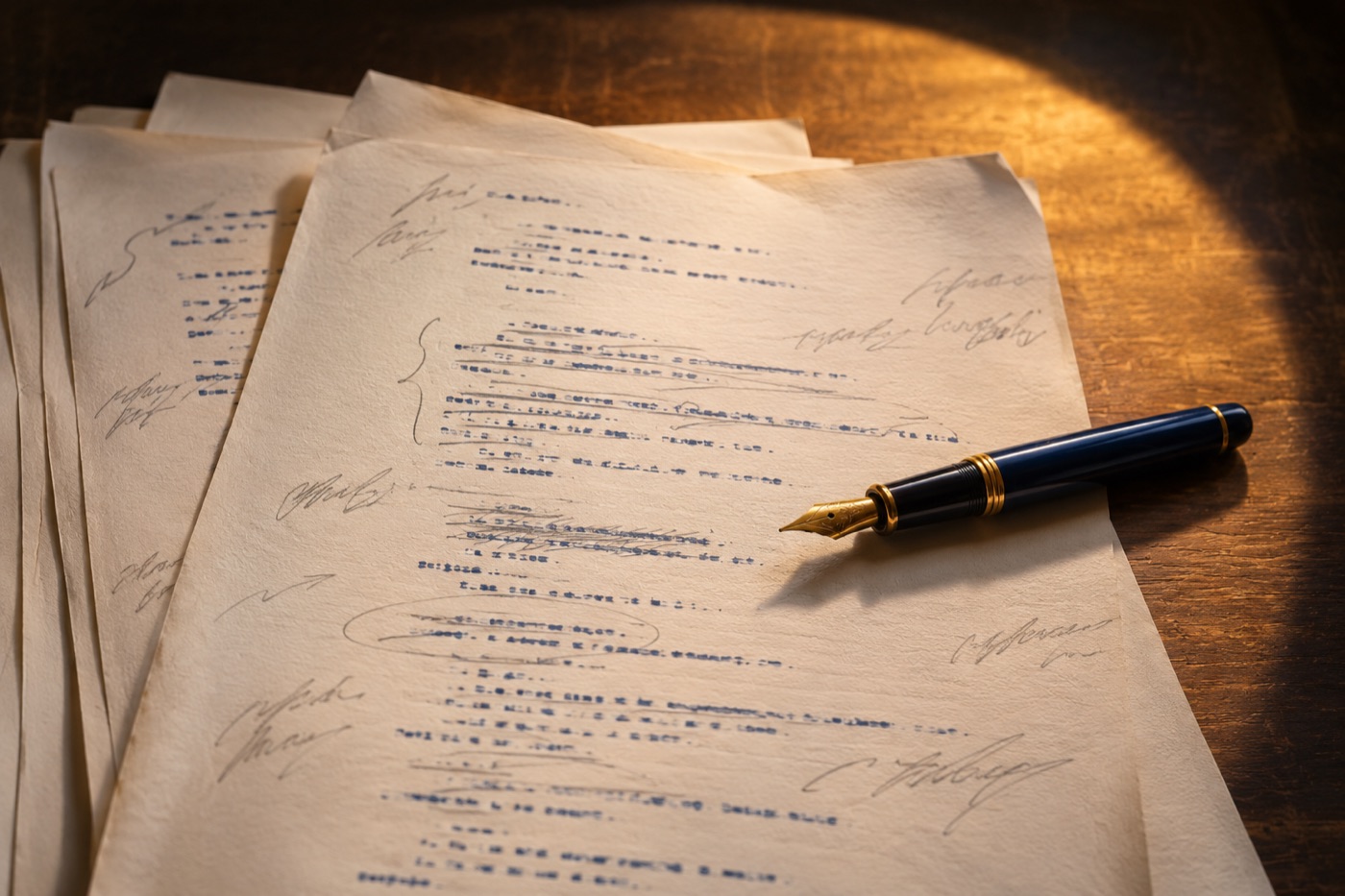
After you have written a first draft, read it aloud. You will spot artificial phrasing, overlong lines and passages where the dialogue lacks flow. A reading with actors will be even more revealing: you will hear at once which lines suit the stage and which need reworking. Then ask the performers where they stumbled and what seemed unclear. Write their remarks next to the lines concerned instead of correcting from memory. Work scene by scene so the team can focus on a single situation at a time.
Where to Test a Text and Find Support
Before moving on to staging, you can test your text at a public reading, called a mise en voix in France. Actors read the work in front of an audience, and you watch which passages hold attention and where it drops. This experience gives concrete feedback that no solitary reading can offer. It lets you judge the dialogue and the stage directions before undertaking a production.
It also helps to know the institutions that support authors. In France, the national grant for the creation of dramatic texts is managed by ARTCENA, the national center for circus, street and theater arts. A committee selects the recipients. Théâtre Ouvert, which describes itself as the National Center for Contemporary Dramaturgy, also plays a role in this field. Writing can thus open the way to first meetings with theater professionals.
Writing for the Stage as a Craft
Theater writing is a craft learned by practice: writing short scenes, working on the subtext of dialogue, keeping stage directions to the essentials and reading your texts aloud on a regular basis. Begin with one scene, let it ring out and listen to what works. Now it is up to you to work on your dramatic text. We wish you a fine first scene.